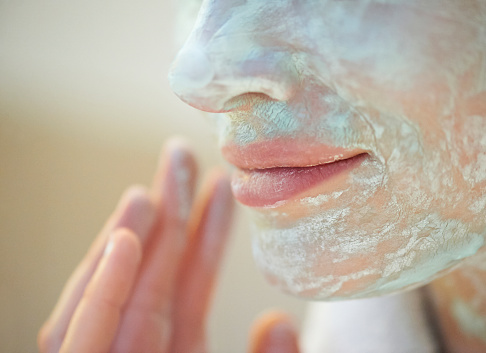
Winter is a great time to give your skin a clean start! Begin exfoliating in a regular basis to reduce the amount of dead skin cell build-up on the skin. Exfoliating refreshes the skin in an instant and it offers a multitude of anti aging benefits.
Today we have an endless amount of options for not only the kind of products to use but the ways in which we may use them. Lets get started on understanding the following methods of exfoliation and learn about all the additional means and ingredients that will give our skin a clean start.
Mechanical + Physical Exfoliation
Mechanical exfoliation engages the use of a brush, sponge, or washcloth. Physical Exfoliation is the use of products containing exfoliating ingredients you can feel i.e., Corn Cob Meal, Rice Bran, Oatmeal, etc. Both types of exfoliation create friction on the surface of the skin to loosen the outer, dead layer of the skin. Be gentle! Excessive friction may result in skin inflammation, sensitivity and/or irritation.
What, when and how often you should use?
Skin Concern |
Physical Exfoliating Substance |
Mechanical Tool |
When |
Application per week |
Dry Aging |
x |
PM |
3X |
|
Oily |
x |
PM |
3X |
|
Combination |
x |
PM |
3X |
|
Acne/inflame |
NO |
NO |
NO |
NO |
Acne/non-inflame |
x |
PM |
3X |
|
Sensitive |
Sponge |
PM |
1X |
Chemical Exfoliation
Chemical Exfoliants contain ingredients that you can’t necessarily see or feel (you may be able to smell them) and are from natural and lab created sources. These are the most sophisticated and effective methods of exfoliation.
Alpha Hydroxy Acids
Lactic Acid, Salicylic Acid and Glycolic Acid primarily affect the skin by speeding cell turnover in the epidermis by loosening the ‘glue’ that holds old skin cells to newly produced skin cells. Sloughing of the surface of the skin, lessens the accumulation of dry scales and stimulates the cell cycle.
Vitamin A
Retinoids are Vitamin A derivatives that help boost collagen production, increase cell turnover and accelerate skin renewal. There are different types of retinoids with varying degrees of effectiveness;
Retinoic Acid is available through a prescription in forms such as Isotretinoin and Tretinoin, and has the most potential to create skin sensitivity.
Retinol is the strongest form available without prescription. Retinol is about 20% weaker than Retinoic Acid, and is slowly converted into Retinoic Acid by enzymes in our skin. This also means there is less skin irritation than Retinoic Acid or Retinoids.
Retinyl Palmitate is the mildest retinoid. It takes longer to convert to Retinoic Acid and has the least skin irritation. It’s my personal ingredient choice!
FACT: Skin Inflammation = #1 cause of skin aging! The less inflammation the skin experiences, the less aging effects will develop insuring a healthier skin!
What, when and how often you should use?
Skin Concern |
Vitamin A |
Lactic Acid |
Salicylic Acid |
Glycolic Acid |
When |
Application per week |
Dry Aging |
x |
x |
PM |
5X |
||
Oily |
x |
x |
PM |
3X |
||
Combination |
x |
x |
PM |
3X |
||
Acne/inflame |
x |
x |
x |
PM |
3x |
|
Acne/non-inflame |
x |
x |
x |
PM |
3X |
|
Sensitive |
X |
PM |
1X |
Some skin types may have the choice to use more than one exfoliating method.
The best rules to follow are;
- Select one exfoliating medium at a time
- Start slowly and increase your application as your skin adapts
- Apply sunblock every day
- Stay away from the sun
- Let your Dermatologist or skin care therapist know that you are using exfoliating products
- Stop using for a couple of weeks prior to waxing, threading or laser hair removal
There are endless benefits to exfoliating with today’s product choices. Start exfoliating today and your skin will look fresh and glowing for the Holidays!
If you have questions about which type of exfoliation is best for you, please comment below!
 SkinExpert1